
Checklist dataset Registered 6 April 2016
Review and cladistic analysis of the Neotropical tarantula genus Ephebopus Simon 1892 (Araneae: Theraphosidae) with notes on the Aviculariinae
Published by Plazi.org taxonomic treatments database
Species
Ephebopus cyanognathus West & Marshall, 2000
Classification and descendants
Loading
Loading
Loading
Loading
Loading
Loading
Synonyms and combinations
Media
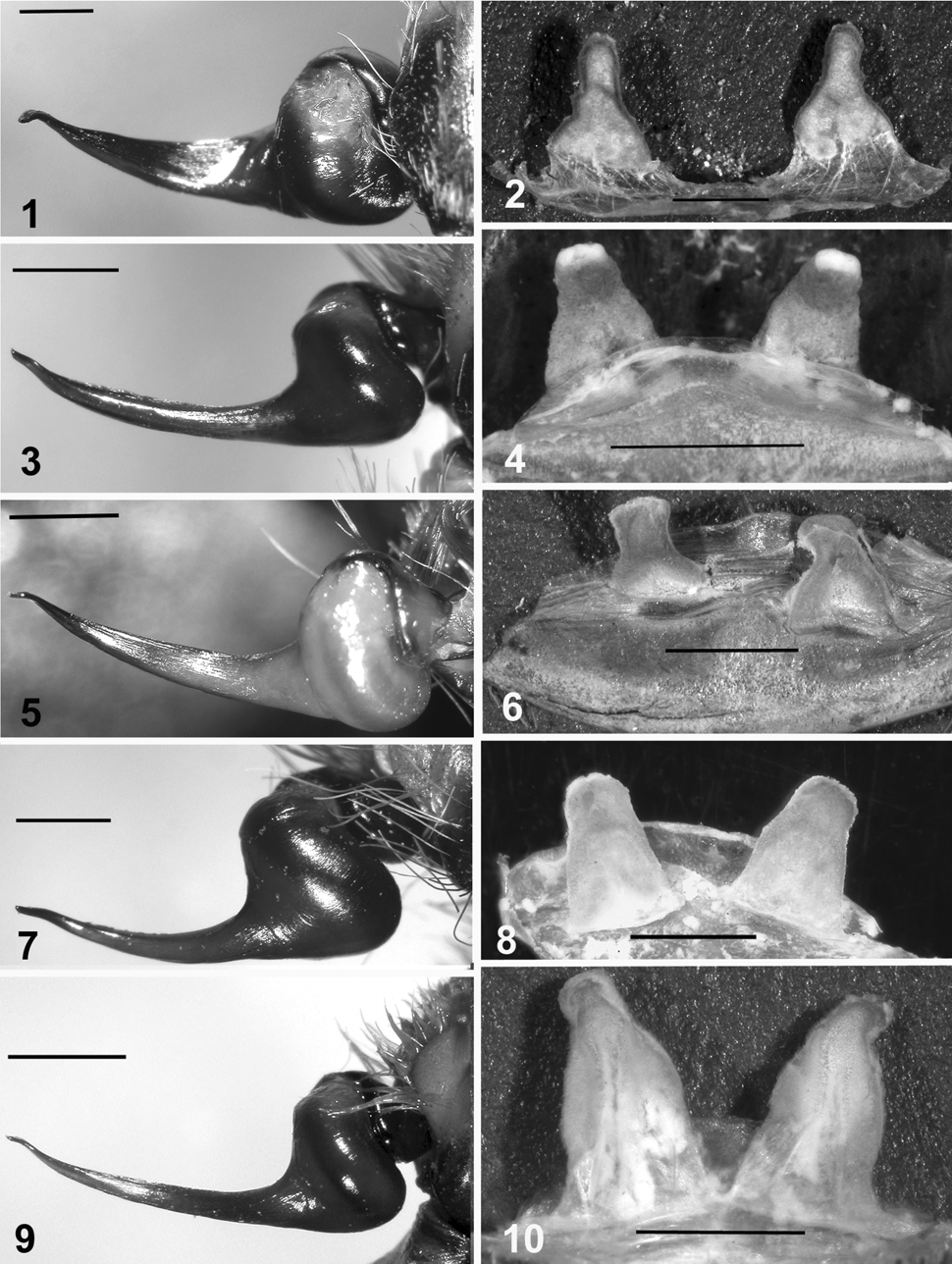
FIGURES 1 – 10. Ephebopus, genitalia. (1 – 2) E. murinus. 1, Male, AMNH, palpal bulb, retrolateral. 2, Female, AMNH, spermathecae. (3 – 4) E. uatuman. 3, Male, holotype, palpal bulb, retrolateral. 4, Female, paratype, spermathecae. (5 – 6) E. cyanognathus. 5, Male, paratype, palpal bulb, retrolateral. 6, Female, paratype, spermathecae. (7 – 8) E. rufescens. 7, Male, paratype, palpal bulb, retrolateral. 8, Female, paratype, spermathecae. (9 – 10) E. foliatus sp. nov .. 9, Male, holotype, palpal bulb, retrolateral. 10, Female, paratype, spermathecae. Scale line: 1 mm.
West, Rick C.;Marshall, Samuel D.;Fukushima, Caroline Sayuri;Bertani, Rogério
CC_BY
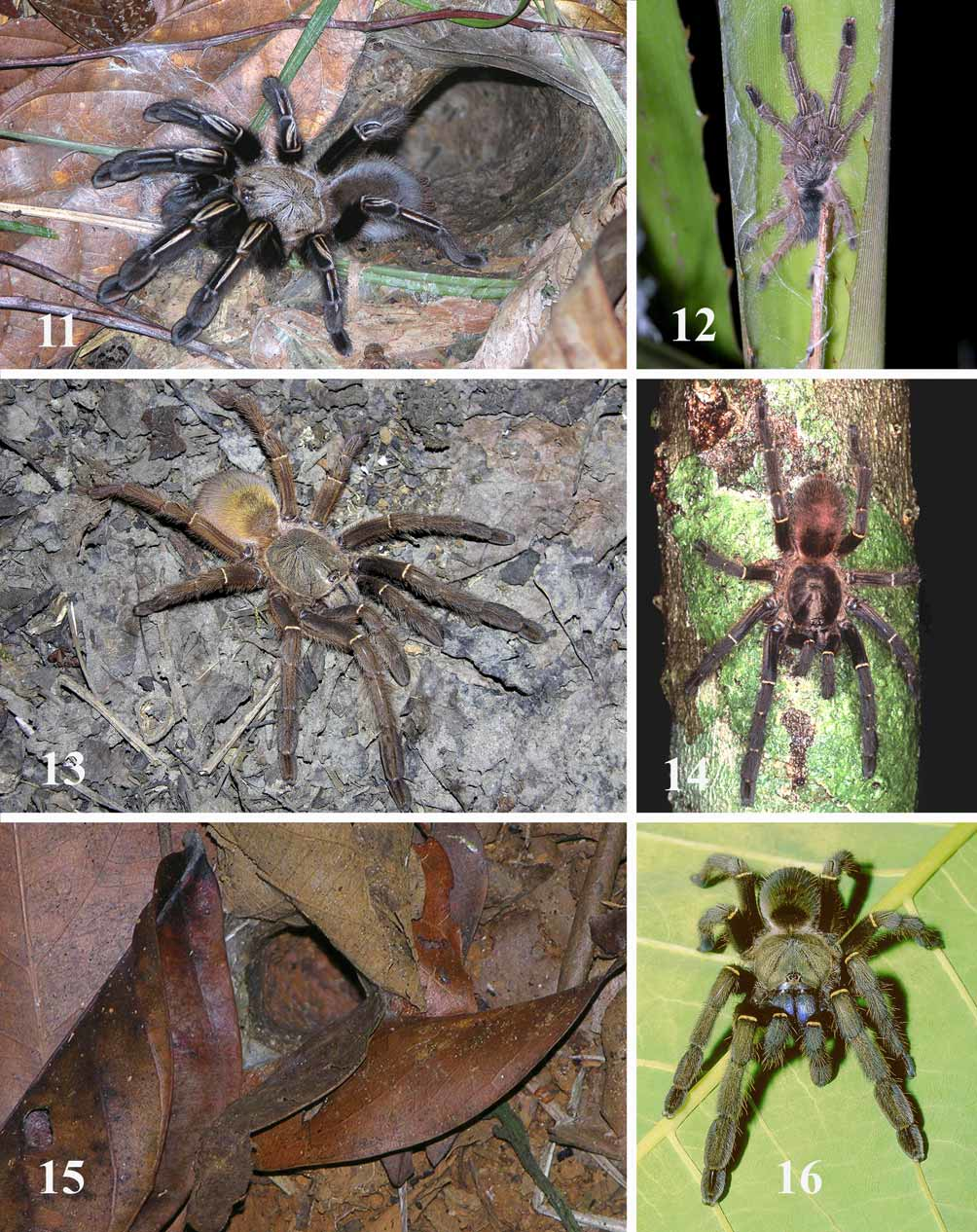
FIGURES 11 – 16. Ephebopus, habitus and burrow. (11 – 12) E. murinus. 11, Female in burrow entrance. 12, Antepenultimate female in retreat in bromeliad leaf. (13, 15) E. uatuman. 13, Female. 15, Detail of burrow entrance. (14) E. foliatus sp. nov., female paratype, in life. (16). E. cyanognathus, female. Photos: 14, M. Kuntner, other by R. C. West.
West, Rick C.;Marshall, Samuel D.;Fukushima, Caroline Sayuri;Bertani, Rogério
CC_BY
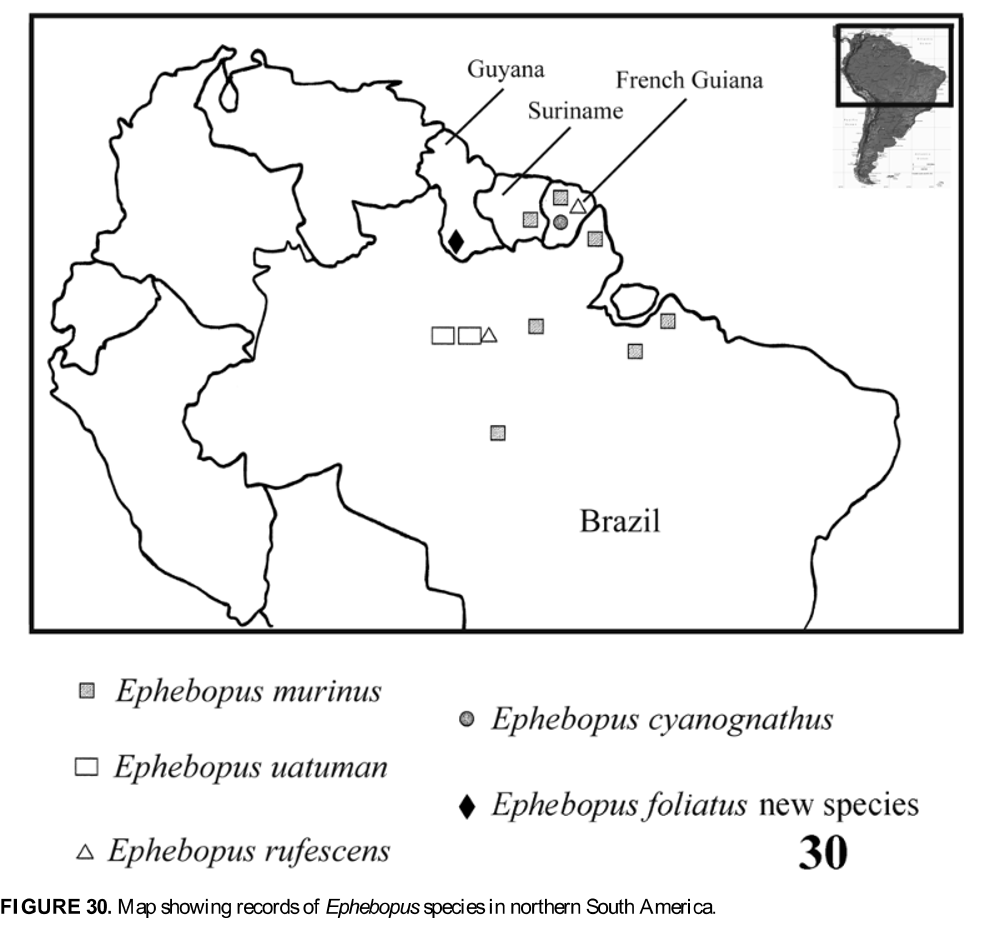
FIGURE 30. Map showing records of Ephebopus species in northern South America.
West, Rick C.;Marshall, Samuel D.;Fukushima, Caroline Sayuri;Bertani, Rogério
CC_BY
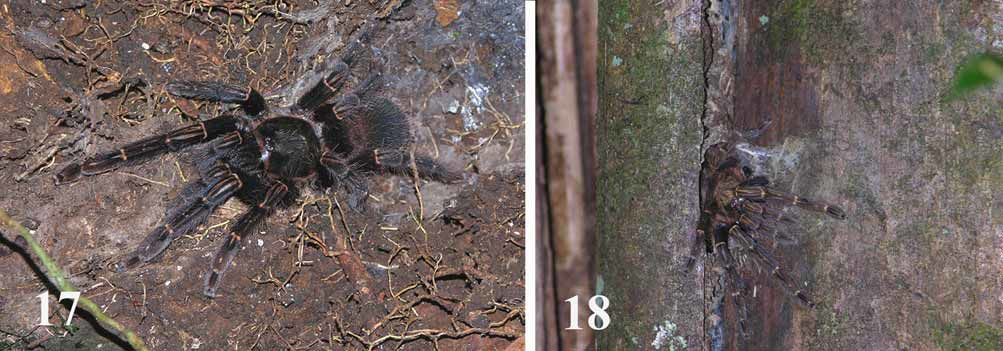
FIGURES 17 – 18. Ephebopus rufescens. 17, Female exposed in retreat under overturned rock. 18, Female in arboreal retreat two meters above ground in palm tree. Photos: R. C. West.
West, Rick C.;Marshall, Samuel D.;Fukushima, Caroline Sayuri;Bertani, Rogério
CC_BY
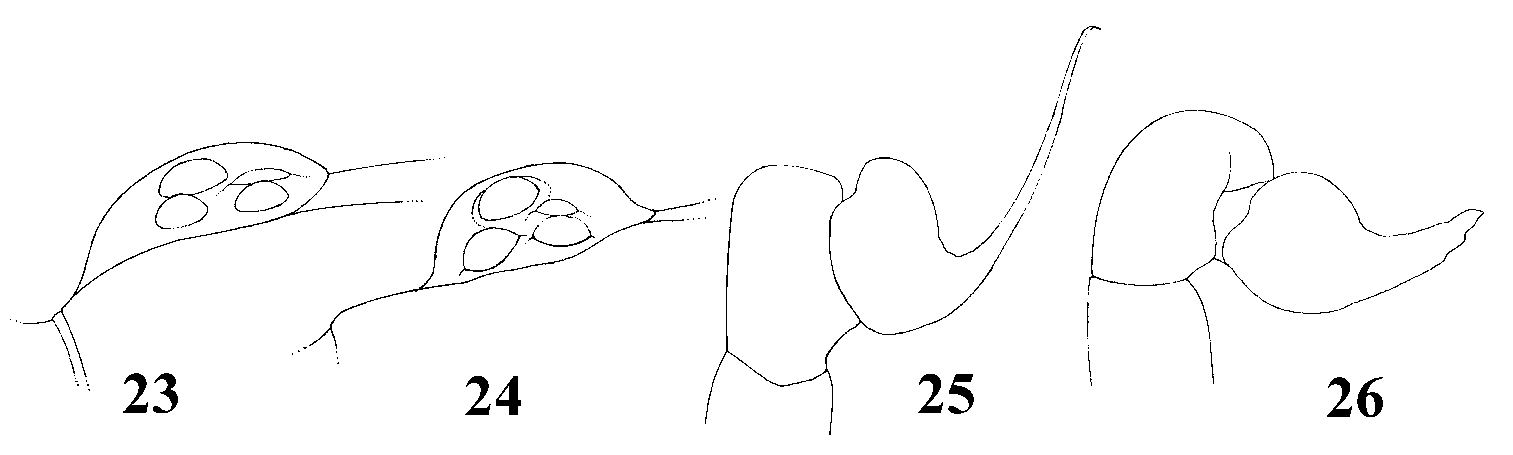
FIGURES 23 – 26. Some characters used in cladistic analysis. (23 – 24) Eye tubercle and clypeus. 23, Heteroscodra sp., female, low eye tubercle and narrow clypeus. 24, Haplopelma sp., female, high eye tubercle and wide clypeus. (25 – 26) Cymbium and male palpal bulb. 25, Avicularia sp., subtriangular cymbium, thin embolus with curvature to retrolateral side. 26, Lasiodora sp., male, rounded cymbium, thick embolus.
West, Rick C.;Marshall, Samuel D.;Fukushima, Caroline Sayuri;Bertani, Rogério
CC_BY
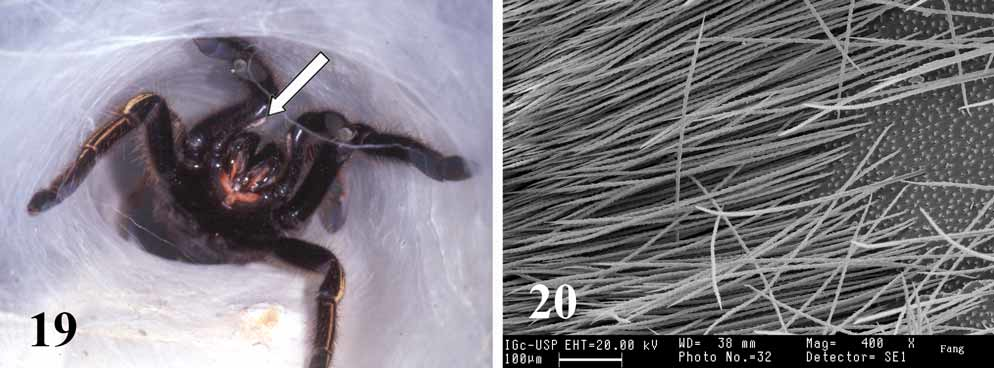
FIGURES 19 – 20. Ephebopus murinus. 19, Threat display showing urticating hair pad on apical prolateral pedipalp femur (arrow). 20, Detail of type V urticating hairs. Photo: R. Bertani.
West, Rick C.;Marshall, Samuel D.;Fukushima, Caroline Sayuri;Bertani, Rogério
CC_BY
Citation
Ephebopus cyanognathus West & Marshall, 2000 in undefined